Prasat Sa Kamphaeng Yai: Sisaket's Largest Khmer Sanctuary
Prasat Sa Kamphaeng Yai: Sisaket's Largest Khmer Sanctuary
Sisaket does not advertise its treasures loudly, which is why the province's largest Khmer sanctuary still feels like a discovery. Prasat Sa Kamphaeng Yai, in Uthumphon Phisai district, about 40 kilometres west of Sisaket town, is the biggest Khmer temple complex in the province: a walled sandstone and laterite sanctuary that began as a Hindu temple in the 10th to 11th century and grew over time into a Buddhist one. Come here and you may share the place with a school group and a few monks, and nobody else.
A Temple That Changed Religion
Prasat Sa Kamphaeng Yai began as a major shrine in the Angkorian landscape — more precisely, it started as a Hindu temple dedicated to Shiva, built in the Baphuon-influenced Angkorian style. Its name hints at the scale: 'Sa Kamphaeng Yai' means 'great walled pool', after the laterite wall that still encloses the complex.
In the 13th century, under Jayavarman VII, the site became linked to the network of arogayasala hospitals and travellers' rest houses built across the empire, and later became a Theravada Buddhist temple — a role reflected in the Buddha images and adaptations added in the Ayutthaya period and after. Few places in Isan show the Hindu-to-Buddhist transition so clearly in a single walkable complex.
What to Look For
The complex is enclosed by a laterite wall with gopura gateways on the main axis. Inside, let your eyes work from the outside in:
- The enclosing wall and gopura — the sheer scale of the laterite wall is the signature here. The east entrance is the traditional one.
- The main prang — the central sandstone tower on a shared platform, with lintels and pediments carved with Hindu gods, including stories of Shiva and Vishnu.
- Libraries and subsidiary shrines — smaller sandstone buildings flanking the axis, the mark of a major temple, not a minor chapel.
- Later Buddhist additions — Buddha images and adapted shrines that tell the temple's second life.

Photo: Ddalbiez, CC BY-SA 3.0, via Wikimedia Commons
Carvings here are weathered in places, and restoration has been cautious rather than a wholesale rebuild. The rawness is part of the charm: this reads as a real, working ruin, not a polished theme park.
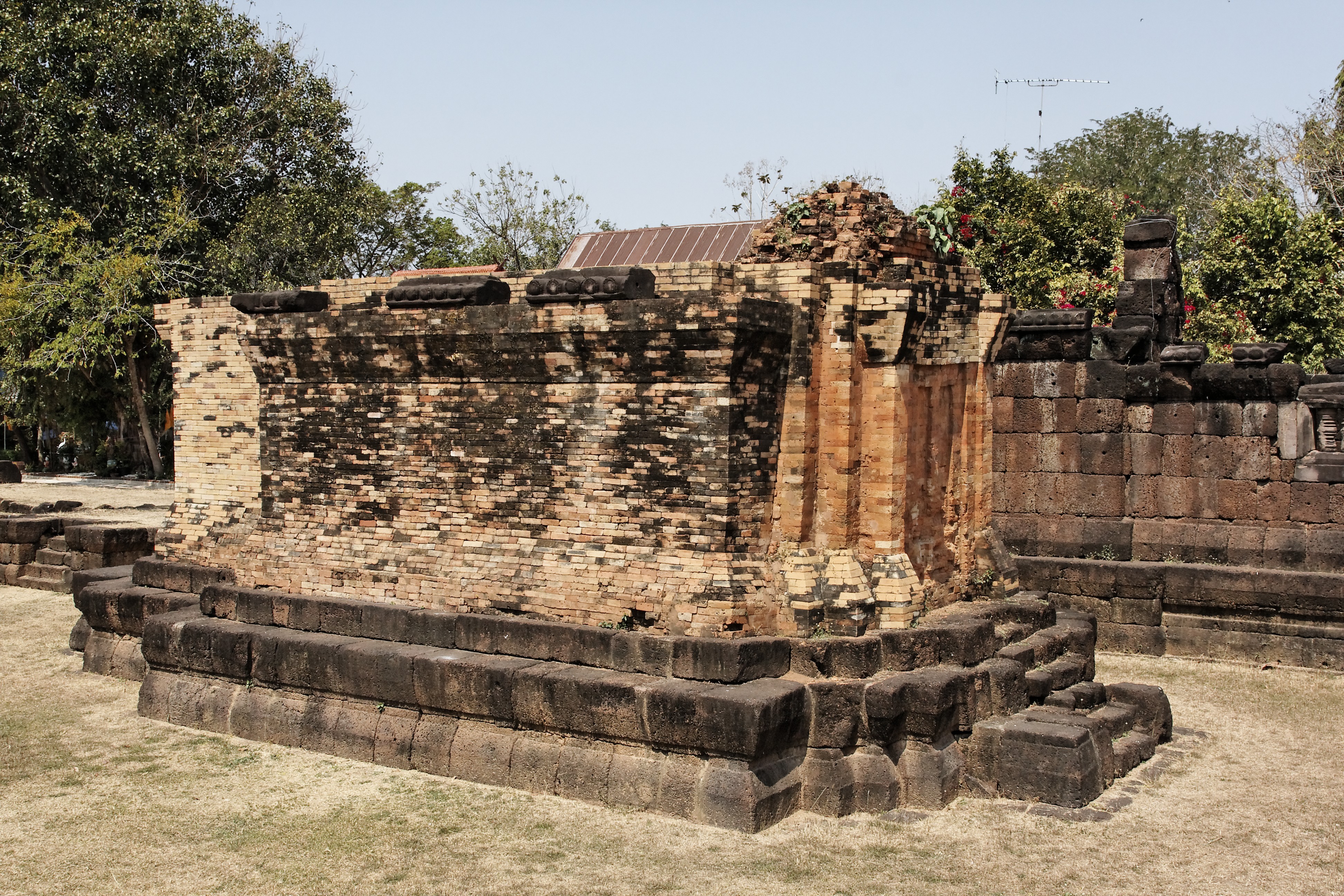
Photo: Ddalbiez, CC BY-SA 3.0, via Wikimedia Commons
Visiting in Practice
The temple sits at Ban Sa Kamphaeng Yai, a short drive from Uthumphon Phisai town, which is on the railway line between Sisaket and Surin, so a train-plus-songthaew trip is possible, though most visitors arrive by car. Signs in the district usually point the way as you get close.
Entry is usually a small fee, typically in the range of 50 baht for foreigners, and the site is open during daylight hours, generally from early morning until late afternoon. Facilities are simple — parking, basic toilets, and sometimes a drinks stall near the entrance. Shade inside the walls is limited, so bring water and a hat.
Most of the ground is flat laterite and grass. The steps up to the prang are steep and uneven — mind your footing, especially after rain when the stone is slippery.
Best Time to Visit
The cool season, November to February, is best for walking the full enclosure. Early morning gives the softest light on the east gopura and the quietest ground. In the wet season the grass inside the walls turns bright green and photographs beautifully, but paths can be muddy.
Avoid early afternoons in the hot season, March to May, when the laterite radiates heat and there is nowhere to hide.
How Long to Stay?
Allow one to one and a half hours to walk the walls, prang and subsidiary buildings properly. History lovers may take longer reading the carvings. Prasat Sa Kamphaeng Yai pairs well with Prasat Sa Kamphaeng Noi, a smaller Khmer temple in the same district, for a half day of Khmer circuits from Sisaket — or as a stop between Sisaket and Surin.
Sisaket's biggest sanctuary is worth the detour. This is Angkor-era heritage at provincial pace, with room to think.

Photo: Ddalbiez, CC BY-SA 3.0, via Wikimedia Commons
— ภาษาไทย —
ปราสาทสระกำแพงใหญ่: ศาสนสถานขอมที่ใหญ่ที่สุดของศรีสะเกษ
ศรีสะเกษไม่โฆษณาสมบัติของตัวเองเสียงดัง นั่นคือเหตุผลที่ศาสนสถานขอมที่ใหญ่ที่สุดของจังหวัดยังรู้สึกเหมือนการค้นพบ ปราสาทสระกำแพงใหญ่ ในอำเภออุทุมพรพิสัย ห่างจากตัวเมืองศรีสะเกษไปทางทิศตะวันตกประมาณ 40 กิโลเมตร เป็นกลุ่มโบราณสถานขอมที่ใหญ่ที่สุดในจังหวัด เป็นศาสนสถานหินทรายและศิลาแลงที่มีกำแพงล้อม ซึ่งเริ่มจากการเป็นเทวสถานฮินดูในศตวรรษที่ 10 ถึง 11 และเติบโตตามกาลเวลาจนกลายเป็นพุทธสถาน มาที่นี่แล้วคุณอาจได้แบ่งพื้นที่กับกลุ่มนักเรียนและพระสงฆ์ไม่กี่รูป และไม่มีใครอื่นเลย
ปราสาทที่เปลี่ยนศาสนา
ปราสาทสระกำแพงใหญ่เดิมเป็นศาสนสถานสำคัญในภูมิทัศน์ยุคอโรคยาศาล กล่าวให้ชัดเจนกว่านั้นคือ เริ่มจากการเป็นเทวสถานฮินดูอุทิศแด่พระศิวะ สร้างในยุคสถาปัตยกรรมเมืองพระนครที่ได้รับอิทธิพลแบบบาปวน ชื่อของมันบอกใบ้ถึงขนาด "สระกำแพงใหญ่" หมายถึงกำแพงใหญ่ คือแนวศิลาแลงที่ยังคงล้อมรอบกลุ่มปราสาท
ในศตวรรษที่ 13 สมัยพระเจ้าชัยวรมันที่ 7 สถานที่แห่งนี้เกี่ยวข้องกับเครือข่ายอโรคยาศาลและที่พักผู้เดินทางที่สร้างขึ้นทั่วจักรวรรดิ และในภายหลังได้กลายเป็นวัดพุทธเถรวาท บทบาทที่สะท้อนอยู่ในพระพุทธรูปและการดัดแปลงที่เพิ่มเข้ามาในสมัยอยุธยาและยุคต่อมา มีเพียงไม่กี่แห่งในอีสานที่แสดงการเปลี่ยนผ่านจากฮินดูสู่พุทธได้ชัดเจนขนาดนี้ในกลุ่มอาคารที่เดินชมได้ในครั้งเดียว
สิ่งที่ควรชม
กลุ่มปราสาทล้อมรอบด้วยกำแพงศิลาแลงพร้อมซุ้มประตู (โคปุระ) บนแกนหลัก ด้านใน ให้สายตาของคุณไล่จากด้านนอกเข้าด้านใน:
- กำแพงล้อมและโคปุระ — ขนาดมหึมาของกำแพงศิลาแลงคือเอกลักษณ์ของที่นี่ ทางเข้าด้านตะวันออกคือทางเข้าตามประเพณีดั้งเดิม
- ปราสาทประธาน — ปรางค์หลักหินทรายบนฐานร่วมกัน พร้อมทับหลังและหน้าบันแกะสลักแสดงเทพเจ้าฮินดู รวมถึงเรื่องราวของพระศิวะและพระวิษณุ
- บรรณาลัยและศาสนสถานบริวาร — อาคารหินทรายขนาดเล็กขนาบแกนหลัก ซึ่งเป็นลักษณะของศาสนสถานสำคัญ ไม่ใช่โบสถ์เล็ก ๆ
- ส่วนเพิ่มเติมทางพุทธในยุคหลัง — พระพุทธรูปและศาลที่ถูกปรับเปลี่ยน ซึ่งบ่งบอกชีวิตที่สองของปราสาท
งานแกะสลักที่นี่สึกกร่อนไปในบางจุด และการบูรณะเป็นไปอย่างระมัดระวังมากกว่าการทำใหม่ครั้งใหญ่ ความดิบนั้นคือส่วนหนึ่งของเสน่ห์ ที่นี่อ่านออกว่าเป็นโบราณสถานจริงที่ยังใช้งาน ไม่ใช่สวนสนุกที่ขัดเงา
การเที่ยวชมในทางปฏิบัติ
ปราสาทตั้งอยู่ที่บ้านสระกำแพงใหญ่ ขับรถระยะสั้นจากตัวอำเภออุทุมพรพิสัย ซึ่งอยู่บนเส้นทางรถไฟระหว่างศรีสะเกษกับสุรินทร์ ทำให้สามารถเดินทางแบบรถไฟบวกสองแถวได้ แม้ผู้มาเยือนส่วนใหญ่จะมาด้วยรถยนต์ ป้ายบอกทางในอำเภอมักชี้ทางเมื่อคุณเข้าใกล้
ค่าเข้ามักเป็นค่าธรรมเนียมเล็กน้อย โดยทั่วไปอยู่ในช่วง 50 บาทสำหรับชาวต่างชาติ และสถานที่เปิดในช่วงเวลากลางวัน โดยทั่วไปตั้งแต่เช้าถึงบ่ายแก่ ๆ สิ่งอำนวยความสะดวกเรียบง่าย มีที่จอดรถ ห้องน้ำพื้นฐาน และบางครั้งมีร้านเครื่องดื่มใกล้ทางเข้า ร่มเงาภายในกำแพงมีจำกัด จึงควรพกน้ำและหมวก
พื้นส่วนใหญ่เป็นศิลาแลงราบและหญ้า บันไดขึ้นปราสาทชันและไม่สม่ำเสมอ ระวังการก้าวเดิน โดยเฉพาะหลังฝนตกเมื่อหินลื่น
ช่วงเวลาที่ดีที่สุดในการเที่ยว
ฤดูหนาว พฤศจิกายนถึงกุมภาพันธ์ เหมาะที่สุดสำหรับการเดินชมกำแพงทั้งหมด เช้าตรู่ให้แสงที่นุ่มที่สุดบนโคปุระด้านตะวันออกและพื้นที่ที่เงียบที่สุด ในฤดูฝน หญ้าภายในกำแพงเปลี่ยนเป็นสีเขียวสดและถ่ายภาพได้สวยงาม แต่ทางเดินอาจเป็นโคลน
หลีกเลี่ยงช่วงบ่ายต้น ๆ ในฤดูร้อน มีนาคมถึงพฤษภาคม เมื่อศิลาแลงแผ่ความร้อนและไม่มีที่ให้หลบ
ควรใช้เวลากี่ชั่วโมง
เผื่อเวลา หนึ่งถึงหนึ่งชั่วโมงครึ่ง เพื่อเดินชมกำแพง ปราสาท และอาคารบริวารอย่างเหมาะสม ผู้ชื่นชอบประวัติศาสตร์อาจใช้เวลานานกว่านั้นในการอ่านงานแกะสลัก ปราสาทสระกำแพงใหญ่เข้าคู่ได้ดีกับปราสาทสระกำแพงน้อย ศาสนสถานขอมขนาดเล็กกว่าในอำเภอเดียวกัน สำหรับครึ่งวันของวงจรเที่ยวขอมจากศรีสะเกษ หรือเป็นจุดแวะระหว่างศรีสะเกษกับสุรินทร์
ศาสนสถานที่ใหญ่ที่สุดของศรีสะเกษคุ้มค่ากับการแวะออกนอกเส้นทาง นี่คือมรดกยุคเมืองพระนครในจังหวะแบบจังหวัด ที่มีพื้นที่ให้ได้คิด


Comments
Post a Comment